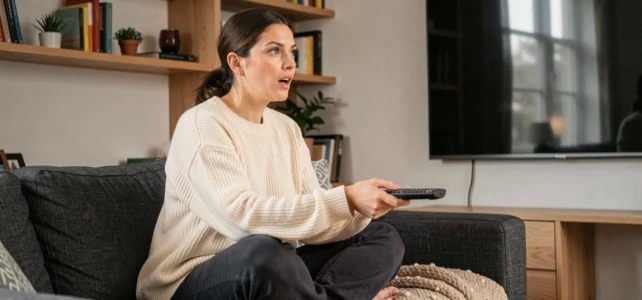
Watching a series in 2026 rarely means just pressing a single button. Between the platform that streams the first episodes, the one that picks up the next season, and the linear channel that offers the same program a few months later, the viewer’s journey resembles an orienteering course. This fragmentation of the offering changes how we spend our leisure time around series and entertainment.
Hybrid offerings and broadcasting windows: what changes for the viewer
Linear television has not disappeared. Usage overlaps: live viewing remains popular for sports events, talk shows, and certain cultural programs, while video on demand dominates for series and films. This hybrid behavior, documented as a fundamental trend in 2026, forces viewers to juggle multiple sources.
Have you ever noticed that a series available on a platform in August is no longer available in October, only to reappear on a TNT channel a few months later? This is the result of the media chronology, a French regulatory framework that sets different broadcasting windows depending on the medium. For the series enthusiast, this means planning viewing schedules according to each platform’s calendar.
The advertising model is also firmly establishing itself in streaming. A growing share of SVOD subscriptions in France relies on ad-supported plans, which alters the perceived price and viewing comfort. Choosing between an ad-free plan and a cheaper plan with ads has now become part of the leisure experience itself.
To explore other ways to enjoy this universe, leisure on Série Z offers ideas that go beyond simple viewing.

Series and participatory culture: leisure that goes beyond the screen
Watching a series is just the starting point. Around each popular program revolves an ecosystem of complementary leisure activities that transforms the passive viewer into an active participant.
Podcasts, forums, and analysis networks
Episode-by-episode analysis podcasts have multiplied. One listens to a forty-minute analysis of a narrative arc, reads detailed discussion threads, and participates in online debates. The time spent talking about a series often exceeds the viewing time.
This phenomenon has a concrete effect on leisure time management. A ten-episode program can generate several dozen hours of additional content. The series becomes a common thread that structures the week, with its fixed broadcast times and community rituals.
Games, quizzes, and immersive experiences
Thematic quizzes around popular series have become a leisure activity in their own right, whether online or in specialized bars. Some franchises offer immersive experiences, escape games, or temporary exhibitions that extend the narrative universe into the real world.
- Online or bar quizzes allow you to test your knowledge of a program while creating social connections around a shared passion.
- Thematic escape games recreate the settings and plots of successful series, with renewed scenarios each season.
- Temporary exhibitions in major cities showcase costumes, props, and production behind-the-scenes, transforming the fan into a museum visitor.
Serial entertainment generates its own cultural outings, halfway between art, performance, and play.
Organizing series nights with family or friends
Collective viewing remains one of the simplest and most unifying leisure activities. However, with the fragmentation of offerings, it requires a minimum of preparation.
The first reflex: check which platform the program is available on and in what subscription plan. A household that combines three or four streaming services must make choices. Pooling subscriptions among close ones remains the most common strategy, even though platforms are gradually restricting account sharing.
The choice of program itself has changed. Reality shows, cultural magazines, and scientific documentaries coexist with fiction series on the same interfaces. A science or natural heritage enthusiast can alternate between a crime series and a documentary about wildlife without changing applications.

The return of live viewing as a social event
Watching a program live, whether it’s a final episode broadcast simultaneously or a talk show, recreates a sense of collective appointment that on-demand streaming had diluted. Social media amplifies this phenomenon: commenting in real time is part of the enjoyment.
Live viewing transforms watching into a collective sport, with its predictions, immediate reactions, and instant debriefs.
Entertainment budget: balancing between platforms, outings, and subscriptions
The fragmented offering comes at a cost. Where a single subscription was sufficient a few years ago, a series enthusiast today must navigate multiple services to access all the programs they are interested in.
- Ad-supported plans reduce the monthly bill but add interruptions that alter the viewing rhythm.
- Bundled offers (telecom + streaming) allow for centralizing several services on a single bill, sometimes at a reduced rate.
- Physical outings (cinema, exhibitions, thematic escape games) represent a one-time budget that complements the monthly subscription.
The decision-making process is no longer just about price. It concerns available time. With catalogs that each contain thousands of programs, the real luxury becomes viewing time, not access to content.
A series enthusiast in 2026 never lacks choices. They lack evenings. The fragmentation of platforms, staggered broadcasting windows, and the proliferation of derivative leisure activities (podcasts, quizzes, park or city experiences) have transformed the simple act of watching an episode into a complete ecosystem of activities. Knowing what to watch, where, and when has become a skill in its own right.