
The ten-year warranty covers damages that compromise the solidity of a structure or render it unfit for its intended use for ten years after the completion of the work. The lesser-known thirty-year warranty extends the builder’s liability up to thirty years in cases of fraud or deceit. These two mechanisms do not operate in the same way, do not protect against the same risks, and do not activate under the same conditions.
Ten-Year Foreclosure: A Deadline That Does Not Stop Like a Prescription
The confusion between prescription and foreclosure regularly costs recourse to poorly informed property owners. The ten-year period is a foreclosure period, confirmed by recent case law from the third civil chamber of the Court of Cassation (period 2023-2025). The difference is significant.
A prescription period can be interrupted by an acknowledgment of responsibility from the builder, a formal notice, or a summons. A foreclosure period, however, runs rigidly from the date of completion of the work. Even if the builder acknowledges their fault in writing, this acknowledgment does not interrupt the ten-year period.
Only a legal summons or a judicial expertise measure can suspend or interrupt this period. A property owner who negotiates amicably for years without taking the matter to court risks becoming foreclosed, with no recourse possible. It is useful to find information on the thirty-year warranty with ImmoVenture to anticipate situations where the ten-year warranty is no longer sufficient.
Equipment on Existing Structures: What Changes with the Ruling of March 21, 2024

Until 2024, replacing a boiler, installing a heat pump, or adding joinery to an existing building could fall under the ten-year warranty if the equipment rendered the structure unfit for its intended use. The ruling from the Court of Cassation on March 21, 2024 (n° 22-18.694) has put an end to this interpretation.
From now on, equipment installed as a replacement or addition to an existing structure (insert, VMC, heat pump, joinery) no longer falls under the ten-year warranty or the two-year warranty for proper functioning. They shift to common contractual liability, unless they themselves constitute a structure within the meaning of Article 1792 of the Civil Code.
For a property owner, this means that the mandatory insurance for builders no longer covers these interventions. The recourse then relies on proving a contractual fault by the artisan, with a less favorable burden of proof. Craftsmen in the secondary work sector (heating engineers, carpenters, heat pump installers) also see their exposure to risk change: their ten-year insurance is no longer intended to cover these sites.
- A heat pump installed on an existing house: common contractual liability, no ten-year warranty.
- A fireplace insert installed as a replacement: same regime, unless the installation alters the load-bearing structure of the building.
- Joinery replaced in an old building: the owner must prove the artisan’s fault to obtain compensation.
Thirty-Year Warranty: Strict Conditions to Engage Liability After Ten Years
The thirty-year liability does not automatically extend the ten-year warranty. It is based on a distinct legal foundation: fraud or deceit by the builder. The ruling from the Council of State on June 28, 2019, established the framework: a builder can be held liable for thirty years if they have deliberately concealed a defect or committed intentional wrongdoing.
Fraud implies an intention to deceive. A lack of waterproofing caused by a calculation error is not sufficient. It must be proven that the builder knew their intervention was defective and chose not to report it. This burden of proof falls on the project owner, making the action difficult without solid material evidence.
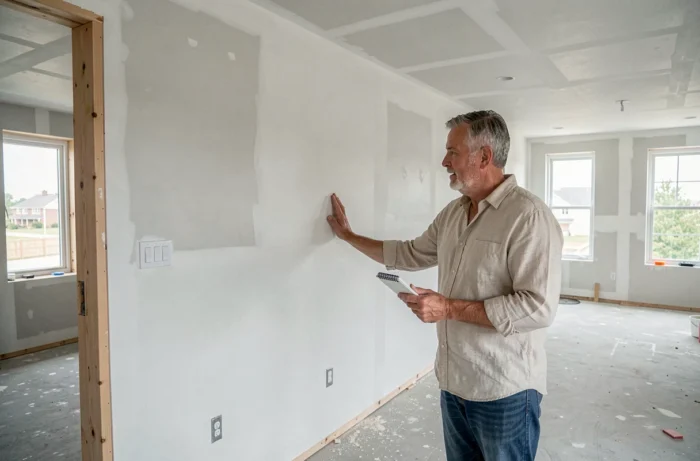
In practice, the thirty-year liability activates in specific situations:
- Deliberate use of materials not compliant with current standards, documented by purchase orders or expert reports.
- Concealment of issues identified during the construction, evidenced by testimonies or written exchanges.
- Willful non-compliance with standards despite alerts from the project manager or control office.
The thirty-year liability does not cover simple defects discovered after the ten-year period. It penalizes fraudulent behavior, not negligence or incompetence.
Acceptance of Work and Starting Point for Legal Guarantees
All legal guarantees in construction (perfect completion, two-year, ten-year) start on the same date: that of the acceptance of the work. This acceptance is a legal act by which the project owner accepts the work, with or without reservations.
Without a formal acceptance report, the starting point for the guarantees becomes vague and contestable in court. A property owner who moves in without formalizing the acceptance risks complicating their future recourse. Acceptance can be express (signature of a report) or tacit (taking possession and full payment), but express acceptance remains the only one that truly secures the deadlines.
Issues reserved during acceptance fall under the perfect completion guarantee (one year). Issues that arise afterward, but within ten years, fall under the ten-year warranty. Issues discovered after ten years only give rise to recourse based on the thirty-year liability, with the conditions of fraud described above.
The choice to properly formalize acceptance determines the entire protection framework. An accurate and dated acceptance report remains the best legal tool available to a project owner to assert their rights, regardless of the warranty invoked.