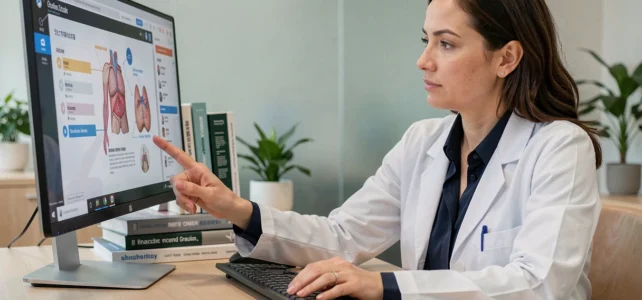
A digital service aimed at healthcare professionals is not just a directory or a documentation database. It relies on specific technical components, including secure identification, interoperability of patient data, and compliance with national standards. Understanding these foundations allows one to distinguish truly useful platforms from generic portals that compile links without added value.
Digital Identification of Healthcare Professionals: the Pro Santé Connect Requirement
Any online service targeting doctors, nurses, or pharmacists must now comply with Pro Santé Connect (PSC). This identity provider, operated by the Agency for Digital Health, uses the OpenID standard. Its implementation has been mandatory since January 1, 2023, for national and territorial digital health services, as well as for local services that are heavily integrated into these systems.
Specifically, a professional accessing a dedicated space goes through a unified authentication process, often via the physical CPS card or the e-CPS mobile application. This identification layer conditions access to patient data, third-party billing, and secure health messaging (MSSanté).
The Viamedis Pro platform, for example, offers an access pathway through Pro Santé Connect for managing third-party billing. This mechanism extends into everyday services, not just institutional tools. A portal that does not offer this authentication is effectively excluded from the professional ecosystem. It is by taking this technical requirement into account that the services of Santé Info structure their offerings for practitioners.
Interoperability and the INS Standard: What Health Platforms Must Guarantee

The National Health Identity (INS) serves as the foundation for patient identification in the French healthcare system. This standard, promoted by the Ségur du numérique, requires that every software or service handling health data uses a unique and qualified identifier for each patient.
For professionals, this means that the tools they use daily (office software, teleconsultation platforms, coordination spaces) must be compatible with the INS. A service that does not comply with this standard cannot exchange data with other actors in the care pathway.
The Technical Components of the Ségur du Numérique
The Ségur program has formalized several interoperability requirements. A software publisher or digital health service provider must integrate:
- The INS standard for patient identification, with a call to the INSi tele-service from the Assurance Maladie to qualify the identity
- MSSanté compatibility for the secure exchange of medical documents between professionals and with patients
- The Shared Medical Record (DMP) as a storage and sharing space for health documents, automatically populated by compliant software
These technical constraints are not optional. Health establishments, medico-social organizations, and private practices using Ségur-referenced software benefit from funding but must comply with the entire framework in return.
Professional Health Space: Distinguishing Regulatory Information from Practical Tools
Institutional portals like those of HAS or Santé publique France disseminate best practice recommendations, opinions, and epidemiological data. They are reference sources for scientific monitoring. Their role is normative.
A professional space oriented towards daily practice meets a different need. It aggregates operational functionalities: patient rights verification, administrative management, access to care protocols tailored to the practitioner’s specialty, and coordination tools among professionals in the same territory.
What Makes a Portal Dedicated to Practitioners Valuable
The difference between a general health information site and a true service for professionals lies in a few concrete criteria:
- Authentication through Pro Santé Connect or e-CPS, ensuring that only professionals registered in the RPPS (Shared Directory of Healthcare Professionals) access reserved content and tools
- Personalization according to profession and specialty, to avoid overwhelming a general practitioner with content intended for hospital pharmacists
- Integration with the practitioner’s existing tools, particularly their practice management software and secure messaging
- Real-time regulatory updates, covering both act nomenclatures and continuing education obligations

Teleconsultation and Territorial Coordination: The Evolution of Digital Health Services
Teleconsultation has changed professionals’ expectations regarding digital platforms. A doctor no longer seeks just an information space, but an environment that allows them to consult, prescribe, and coordinate remotely in a secure framework.
Territorial coordination services are becoming increasingly important, especially in areas where healthcare supply is strained. Devices like the Territorial Professional Health Communities (CPTS) rely on shared digital tools to organize care continuity, chronic patient follow-up, and referrals between professionals.
For a digital service to be adopted by practitioners, it must reduce their administrative burden rather than increase it. Platforms that add a layer of complexity without a concrete gain in terms of time or quality of care are quickly abandoned.
The determining criterion remains the service’s ability to integrate into the professional’s existing workflow, without requiring double entry or additional logins. A tool that adds to the daily routine without simplifying a concrete action will not be used.