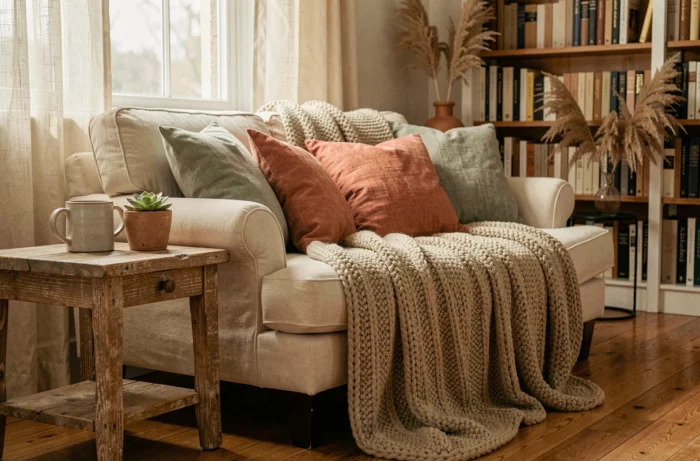
A cocooning interior refers to a layout where every element, from textile coverings to furniture choices, aims to create a feeling of enveloping comfort. Transforming your interior into a cozy cocoon is not just about piling cushions on a sofa. The approach involves decisions about materials, lighting, and even air quality, three dimensions that interact and condition the well-being felt in each room.
Air Quality and Furniture: The Cozy Cocoon Starts with Healthy Materials
The cocooning atmosphere relies on a promise of refuge. This promise falls flat if the air in the room is laden with volatile organic compounds (VOCs) emitted by new furniture or cheap coverings.
Formaldehyde, an irritating VOC, remains widely present in particle board used for dressers, headboards, and entry-level bookshelves. A warm cocoon can no longer be conceived without considering air quality. In France, there is already labeling for indoor air emissions for construction and decoration products, with labels ranging from A+ to C, but its concrete application to furniture remains incomplete.
Before purchasing furniture intended for the bedroom or living room, checking for an A+ label on the tag is a useful reflex. Solid untreated wood, rattan, or metal furniture naturally emits fewer VOCs than melamine-coated particle boards.
To find decorative pieces and home textiles suited to this approach, specialized shops offer ranges designed for indoor comfort, such as on https://jolireve.fr/, which brings together items oriented towards the cocooning universe.
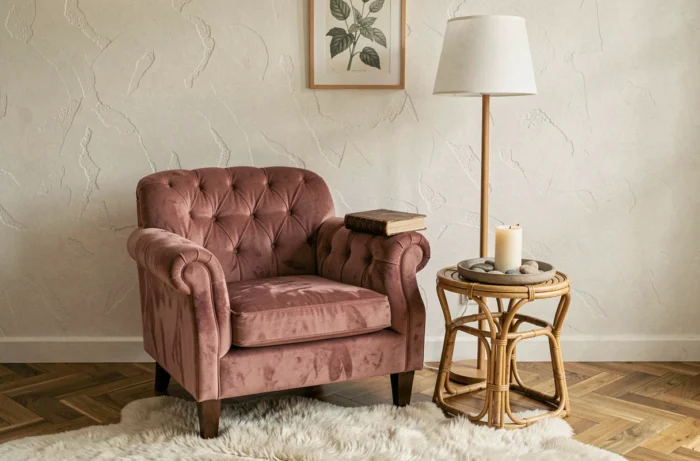
Soothing Color Palette: Which Shades to Choose for a Cocooning Decor
The color of a wall or textile alters the thermal and emotional perception of a space. Saturated and bright shades stimulate attention, which is the exact opposite of the effect sought in a cocoon.
Neutral and Earthy Tones as a Base
Warm beiges, greys, off-whites, and clay tones form a stable base. These soft colors absorb light instead of reflecting it, reducing visual fatigue at the end of the day. A wall painted in light terracotta or linen is enough to anchor the ambiance of an entire room.
Touches of Color through Textiles
Rather than repainting, cushions, throws, and curtains allow for seasonal variations. A rust-colored boucle throw placed on a grey sofa creates a warm focal point without permanent commitment. The pragmatic rule: limit the palette to a maximum of three shades per room to maintain visual coherence.
Lighting and Ambiance: Creating Enveloping Light without Harsh Spots
Lighting is the most underestimated lever in creating a cocooning space. A single cold white ceiling light negates the effect of any cashmere throw.
Multiplying low light sources radically transforms the atmosphere of a room. The goal is to eliminate areas of harsh contrast between shadow and light. Specifically, this involves three complementary levels of lighting:
- A general ambient source in warm light (color temperature around 2,700 K), such as a rattan or fabric pendant that diffuses light without glare.
- Accent lamps positioned at seating height (table lamp, floor reading lamp), which create islands of soft light where one settles.
- Candles or warm white LED strings, placed around the periphery of the room, to add a layer of grazing light in the evening.
A common mistake is to illuminate the center of the room and leave the edges in shadow. A bright cocoon works the opposite way: light comes from the sides and below, enveloping the space rather than looming over it.
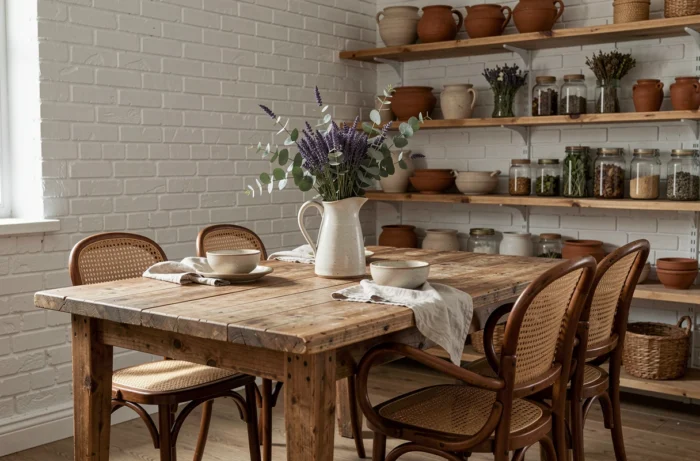
Textiles and Layering: The Method for Tactile Comfort in Every Room
Cocooning is distinguished from a simply “pretty” interior by its tactile dimension. Every surface that the body comes into contact with, seating, floor, armrest, must offer a pleasant texture.
The layering of textiles with varying thicknesses is the central mechanism. A sofa adorned with a thick throw, two velvet cushions, and a twisted knit cushion offers multiple sensations to the touch without appearing overloaded if the shades remain within the same family.
On the floor, a long-pile rug or thick jute placed on a wooden or tiled floor changes the thermal perception of the entire room. In the bedroom, bedding plays an equivalent role: a natural filling duvet paired with percale cotton sheets creates an enveloping effect that polyester cannot replicate.
- Living room: combine a wool throw, washed linen cushions, and a natural fiber rug.
- Bedroom: layer a cotton gauze bedspread over a thick duvet, with percale pillowcases.
- Reading nook or office: add a corduroy back cushion and a footrest covered in boucle fabric.
Natural materials like linen, wool, and cotton age better than synthetic fibers and gain softness over washes, which enhances the cocoon effect over time.
Transforming an interior into a cozy cocoon relies on concrete choices at every step: checking furniture emissions, restricting the color palette, repositioning light sources, and investing in textiles that the skin appreciates. The real comfort of a home is measured as much by what we breathe as by what we touch.