
Well-being on a daily basis is measured through concrete indicators: sleep quality, perceived stress level, regularity of physical activity, and dietary diversity. Competing articles on the subject often repeat the same generic advice. This article isolates ten practices whose impact can be verified on identifiable physiological or behavioral parameters.
1. Sleep Chronobiology Rather Than Arbitrary Duration
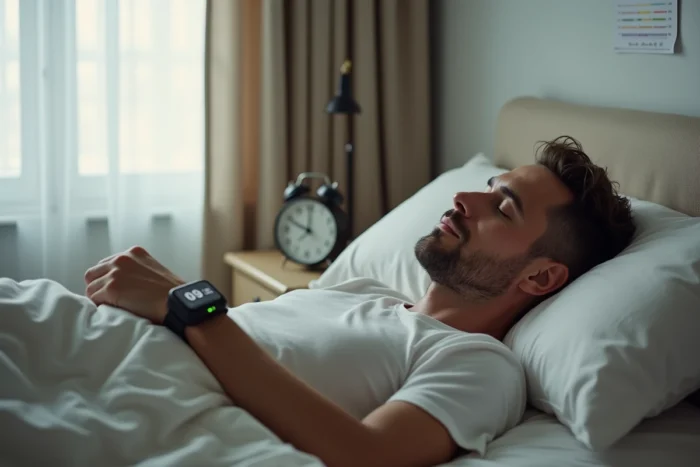
Aiming for a fixed duration of sleep without considering one’s own cycles often results in waking up during deep sleep phases. The parameter to observe is the regularity of bedtime and wake-up time, including on weekends.
A shift of more than an hour between weekdays and weekends is enough to disrupt the circadian rhythm. The regularity of going to bed matters more than the total duration. Keeping a sleep diary for two weeks helps identify one’s optimal time slot.
Those looking to find well-being on Belle en Forme will discover additional resources on lifestyle and sleep.
2. Exposure to Natural Light in the Morning

Morning natural light synchronizes the biological clock by inhibiting melatonin secretion. Exposure for a few tens of minutes within the hour following waking directly affects cortisol, perceived energy, and the quality of falling asleep in the evening.
Going outside or positioning oneself near a window in the first hour after waking is an underestimated lever. In winter, a light therapy lamp calibrated to a sufficient intensity can compensate for the lack of light.
3. Micro-Physical Activity Integrated into Routines

Regular physical activity reduces stress markers and promotes longevity. In contrast, intensive programs abandoned after three weeks produce no lasting effects.
The most reliable approach is to integrate micro-movements into daily gestures:
- Always take the stairs instead of the elevator, even for two or three floors
- Walk during phone calls or informal meetings
- Interleave a five-minute joint mobility break every ninety minutes of sitting
Accumulating these micro-activities throughout the day produces a volume of effort comparable to a moderate workout.
4. Verification of Well-Being Apps Before Use

Sleep, nutrition, or stress tracking apps are multiplying. Official recommendations emphasize the need to choose apps validated by health agencies such as HAS or Anses, and to check the management of personal data (GDPR compliance, storage location).
Before entrusting health data to an app, three checks are necessary: is the publisher identifiable, is the privacy policy explicit, and does the app rely on cited scientific sources? An unvalidated tool can provide erroneous recommendations and create a false sense of security.
5. Diverse Diet Rather Than Restrictive Diet

The trend towards precision nutrition encourages adjusting intake according to individual profiles (age, microbiome, activity level). This approach differs from standardized diets that exclude entire families of foods without medical justification.
Reducing refined sugars and saturated fatty acids while favoring unsaturated fatty acids, whole grains, and fruits and vegetables remains the consensus foundation. An additional serving of fruits and vegetables per day reduces the risk of depression by 3% according to a scientific review cited by medical sources.
6. Contact with Nature as a Stress Regulator

Extended sessions in natural environments affect heart rate and blood pressure. The effect does not require an ambitious hike: a walk of twenty to thirty minutes in an urban green space is enough to lower cortisol.
This lever is distinct from physical activity. Even without notable effort, simply being in a green environment alters physiological parameters related to stress.
7. Stress Management Through Heart Coherence

Among stress management techniques, heart coherence stands out for its simplicity and quick execution. The standard protocol relies on a cycle of controlled breathing: inhale for a given time, exhale for the same time, for five minutes.
Three sessions a day (morning, noon, evening) produce a measurable effect on heart rate variability. Five minutes of heart coherence reduce cortisol for several hours.
8. Reducing Screens in the Hour Before Bedtime

The blue light emitted by screens delays melatonin secretion. Turning off screens at least one hour before bedtime improves sleep onset latency and deep sleep quality.
The issue goes beyond blue light: the content consumed (news, social media) stimulates the sympathetic nervous system. Replacing the screen with a low cognitive stimulation activity, such as reading on paper, prepares the transition to sleep.
9. Regular In-Person Social Connections

Quality social interactions are among the most reliable predictors of subjective well-being. In-person exchanges activate neurobiological mechanisms (oxytocin secretion) that digital interactions poorly replicate.
Maintaining at least one face-to-face exchange per week with a close person constitutes a minimum threshold identified by social psychology research. This does not require a grand event: a coffee, a walk, or a shared meal is sufficient.
10. Periodic Audit of Well-Being Habits

Adopting good habits is not enough if they deteriorate without notice. A quick assessment every two weeks, on five key parameters, helps detect deviations before they settle:
- Sleep regularity (bedtime and wake-up time)
- Number of balanced meals per week
- Frequency of physical activity, even light
- Daily screen time outside of work
- At least one in-person social moment during the week
Regular tracking transforms intentions into measurable habits. It is not willpower that maintains behavior, but feedback.
Daily well-being relies less on spectacular resolutions than on the regular adjustment of concrete parameters. The ten practices listed here share a common point: each can be evaluated, corrected, and maintained without special equipment or budget.