Interior decoration in 2025 is no longer just about stacking Pinterest references. Long-lasting projects rely on a technical management of color, a coherent choice of materials, and a fine understanding of proportions. Here, we discuss the concrete levers that shift an interior from merely acceptable to truly accomplished.
Soft dopamine decor: managing the color saturation of your interior
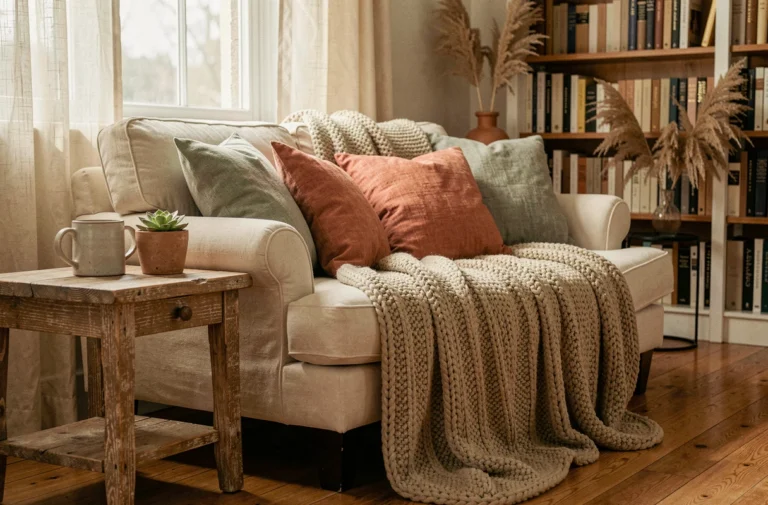
The Dopamine Decor trend, which has emerged in recent seasons, encourages the injection of bright colors to stimulate daily well-being. In practice, feedback from designers converges: a soft dopamine version is essential to avoid visual fatigue. We work with colored accents rather than total immersion.
Specifically, this means limiting saturated hues to one or two elements per room (a chair, a wall, a pendant light). The rest of the decor remains in a neutral or pastel palette that absorbs the chromatic energy without creating cognitive overload.
We recommend testing colors at different times of the day before finalizing a choice. A terracotta shade that appears warm under natural light can turn oppressive under warm artificial lighting. This fine management of saturation distinguishes a sustainable trendy decoration from a fleeting fad that becomes tiresome in a few months.
To explore pieces and objects that fit into this logic of controlled accents, specialized catalogs like the place-a.com decor site allow you to compare ranges without having to visit a showroom.
REP furniture sector: what the regulations change for your decoration
Most decor inspiration articles overlook a regulatory framework that is, however, structuring. In France, furniture falls under the Extended Producer Responsibility (REP) furniture sector since December 2012. This obligation requires manufacturers and distributors to finance the collection and recycling of end-of-life furniture.
For consumers, the impact is direct: an eco-contribution is included in the price of each new piece of furniture. When renewing a living room or bedroom, this contribution finances the free pickup of old furniture by approved organizations.
Concrete consequences on your decor choices
- A piece of furniture sold without visible mention of eco-contribution on the invoice indicates a non-compliant distribution circuit, to be avoided
- Favoring repairable or transformable pieces reduces the overall cost over several years and limits reliance on the recycling sector
- Second-hand furniture is exempt from eco-contribution, making it a relevant budget lever for decorative items (consoles, side tables, shelves)
Integrating sustainability into your decoration choices is not an extra soul but an economic factor. A convertible sofa designed to last absorbs the REP contribution better than a disposable model replaced every three years.
Proportions and circulation: the true lever of a successful room
A living room can feature trendy furniture, well-chosen colors, and careful lighting, yet still appear cramped or unbalanced. The problem is almost always proportional.
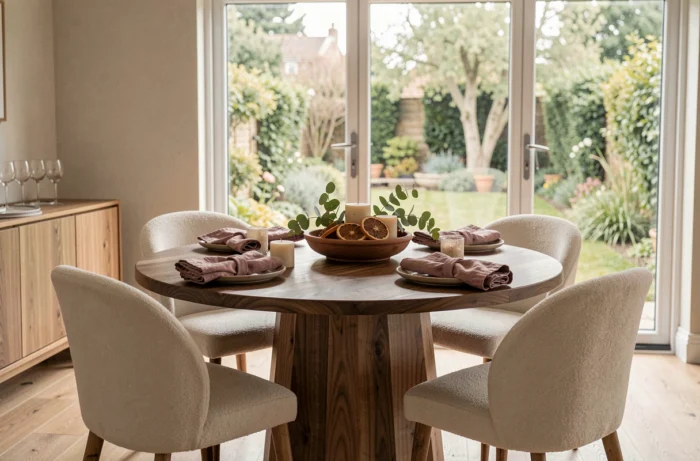
The basic rule we apply: the main furniture should not occupy more than two-thirds of the floor area. The remaining third ensures smooth circulation and visual comfort that gives the room a sense of spaciousness, even in a small space.
Hierarchy of volumes in a living room
Place the most imposing piece (sofa, bookshelf) first, then arrange secondary pieces based on the remaining space. This method avoids the gradual accumulation that ultimately saturates the room.
A common mistake is to choose each decorative object individually, in-store or online, without comparing its actual dimensions to those of the room. A rug that is too small under a coffee table creates a floating effect. An oversized pendant light in a narrow hallway crushes the volume.
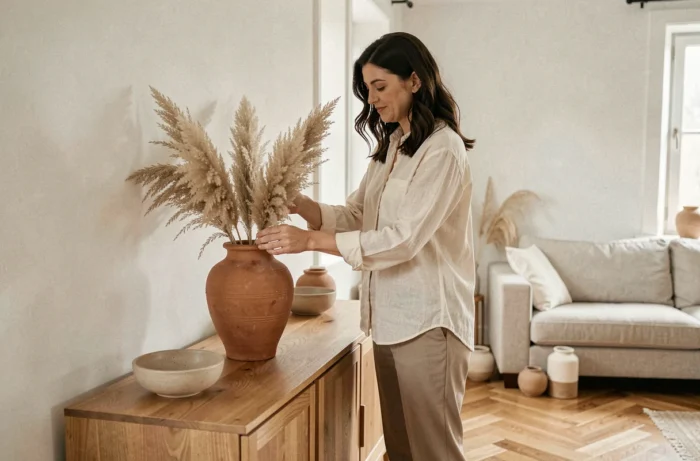
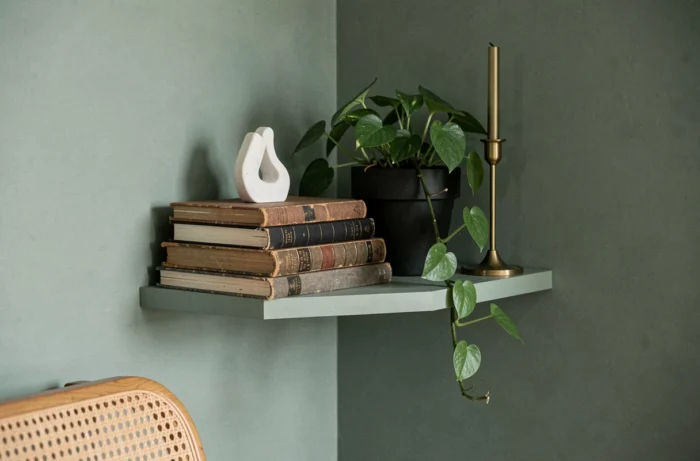
We observe that the most accomplished interiors limit decorative elements by zone: three to four objects maximum on a side table, one focal point per wall. This restraint produces more effect than an accumulation, no matter how trendy it may be.
Walls and coverings: going beyond white paint without risk
All-white remains the default reflex in interior decoration, often out of fear of making a mistake. However, there are low-risk alternatives that radically transform the atmosphere of a room.
- The lime wash provides a matte and slightly irregular texture that breaks the coldness of smooth walls while remaining in neutral tones
- Panoramic wallpapers, applied to a single wall, create a focal point without committing the entire room
- Mass-tinted coatings (clay, tadelakt) offer a visual depth that is impossible to achieve with standard paint
- Thin paneling, installed horizontally at the base, adds relief and protects the lower part of the walls in high-traffic areas
The choice of wall covering influences the atmosphere more than the furniture. A clay-coated wall in a living room alters the thermal and acoustic perception of the room, not just its aesthetics.
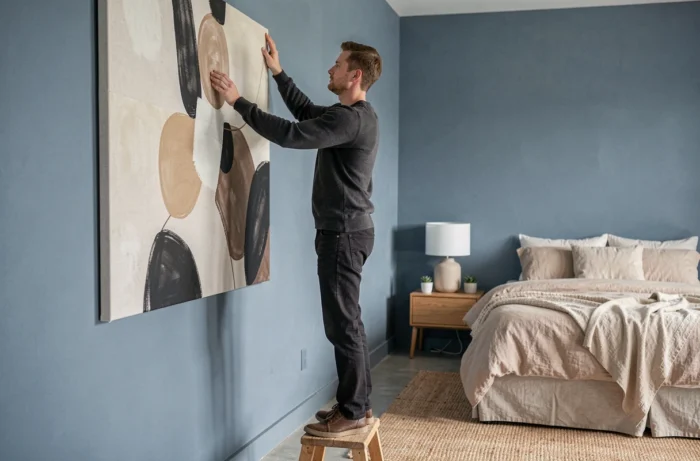
The combination of two wall finishes in the same room (one textured wall, three smooth walls) is enough to create contrast without multiplying purchases. This approach works well in both contemporary styles and older homes.
Interior decoration gains coherence when each choice is based on a technical logic rather than an accumulation of inspirations. A well-treated wall, respected proportions, and a controlled color palette produce a result that dozens of accessories cannot compensate for.