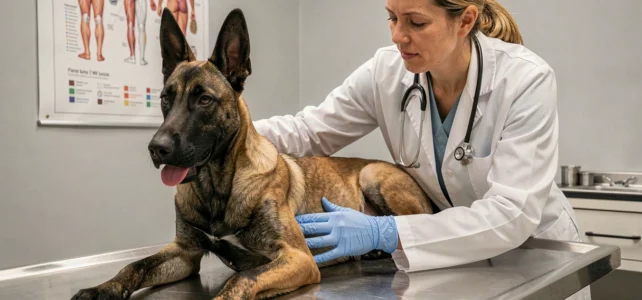
Castration and sterilization of the Malinois refer to two distinct procedures. Castration removes the gonads (testicles in males, ovaries in females), eliminating the production of sex hormones. Surgical sterilization, on the other hand, prevents reproduction while preserving the hormone-producing organs. This difference affects the dog’s behavior, metabolism, and long-term health.
Castration or sterilization of the Malinois: two procedures, two logics
In males, castration removes the testicles. The hormonal consequences are clear: a decrease in escapes related to female heat, a reduction in certain urinary marking behaviors, and a decrease in testosterone production. Sterilization (ligation of the vas deferens, or vasectomy) leaves the testicles in place. The dog remains hormonally fertile but can no longer reproduce.
In female Malinois, castration (ovariectomy or ovariohysterectomy) eliminates heat cycles and the risk of pregnancy. Sterilization through tubal ligation maintains the hormonal cycle, with its protective advantages but also its drawbacks (persistent heat, retained risk of pyometra).
The choice between these two options depends on the desired outcome. For a working Malinois whose hormonal behavior is not problematic, sterilization may be sufficient. For a family dog exhibiting escapes or hormone-related aggression, castration provides a more comprehensive solution. To better understand these distinctions applied to the breed, Chabadog’s sterilization advice details each scenario precisely.
Age for castration of the Malinois: why wait for physical maturity
The Malinois is a large dog whose bone and joint growth extends well beyond puberty. Waiting for complete physical maturity, often between 18 and 24 months, is a recommendation increasingly shared by veterinarians specializing in working breeds.
Early castration deprives the body of the hormones necessary for the closure of growth plates. In a dog like the Malinois, which is physically active (jumping, running, pulling), this incomplete closure can lead to long-term joint vulnerabilities.
The veterinarian evaluates several criteria before setting the date for the operation:
- The stage of bone development, sometimes verified by X-ray for sport or working dogs
- The dog’s behavior: a male that shows neither escapes nor hormonal aggression can wait without risk
- The general health and weight, as pre-existing overweight complicates postoperative recovery
For females, the question is different. An ovariectomy performed before the first heat reduces the risk of mammary tumors. After the first heat, this benefit gradually decreases. The veterinarian balances oncological protection and physical maturation based on the female’s profile.
Risks and side effects after castration of the Malinois
Weight gain is the most documented effect. Castration permanently lowers the dog’s energy needs. Dietary adjustment must be immediate, not delayed by a few weeks. Reducing the ration or switching to a food formulated for sterilized dogs as soon as returning home limits fat mass gain.
A less known effect concerns the coat. Some castrated Malinois develop a fluffier coat, with a texture different from their original fur. This change, sometimes subtle, can bother owners attached to their dog’s physical appearance or those who show them.
Behavior after castration: what really changes
Castration reduces behaviors directly linked to testosterone: excessive marking, escapes during female heat, certain forms of mounting. However, aggression related to fear or a lack of socialization does not disappear after the operation. The Malinois is a reactive dog by temperament. Castration does not replace structured educational work.
For males whose behavior raises questions, hormonal implants (temporary chemical castration) allow testing the effects of hormonal suppression before committing to definitive surgery. This option remains underutilized even though it offers a reliable insight into the expected behavioral outcome.
Postoperative follow-up for the Malinois: the critical phase
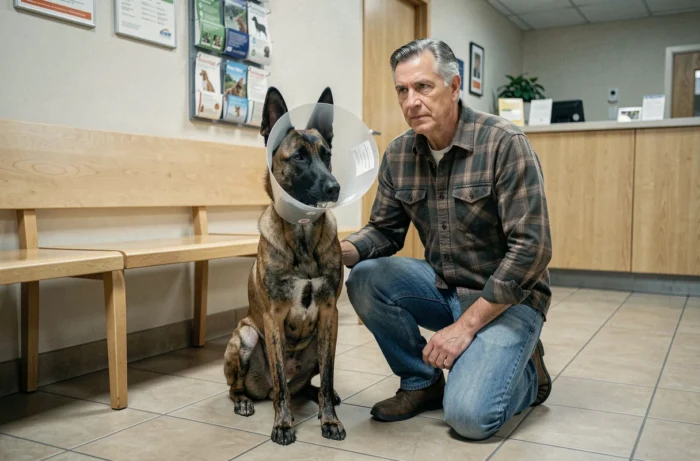
The Malinois does not tolerate inactivity well. This is precisely what makes recovery delicate. Activity restriction usually lasts one to two weeks, during which jumping, running, and intense play should be avoided.
Monitoring the surgical wound is a priority. A collar or protective bodysuit prevents the dog from licking the operated area. Signs of infection (increasing redness, discharge, abnormal swelling, fever) warrant a prompt veterinary consultation.
- Check the wound twice a day during the first week
- Keep the dog calm, limiting outings to short leash walks
- Adjust the food ration the day after the procedure to prevent weight gain
- Adhere to the appointment for suture removal or postoperative check-up set by the veterinarian
The gradual resumption of physical activity is done on veterinary advice. For a sporty Malinois, plan for a return to full training within three to four weeks depending on healing.
The decision to castrate or sterilize a Malinois impacts the dog’s health for several years. The timing of the procedure, the type of surgery, and dietary follow-up are as important as the surgical act itself. An in-depth discussion with a veterinarian familiar with the specifics of working breeds remains the best starting point.