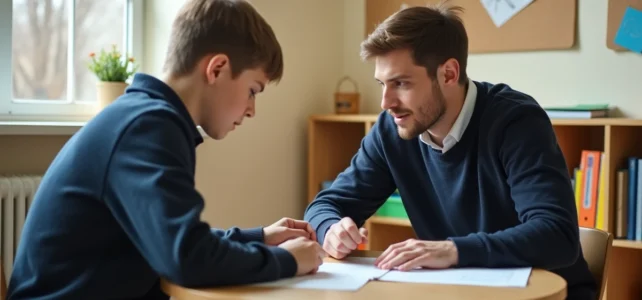
The educational monitor intervenes daily with people in situations of vulnerability, disability, or exclusion. Their role goes beyond assisting with daily tasks: they actively participate in the construction of individualized educational projects, in connection with multidisciplinary teams. The social and medico-social sector regularly recruits for this profile, but the contours of the position are evolving faster than what traditional job descriptions suggest.
Transformation of the medico-social offer and new expectations of the profession
The historical missions of the educational monitor (animation, organization of daily life, support for autonomy) remain the foundation of the position. What is changing is the framework in which they are carried out.
The transformation of the medico-social offer led by the HAS pushes institutions to rethink their practices. The concepts of self-determination and the active participation of the supported person in their own project are no longer just intentions stated in a report: they now appear in job descriptions and job offers.
In practice, the educational monitor is increasingly called upon to contribute to internal quality processes, participate in institutional working groups, and integrate recommendations from HAS evaluations. This “continuous improvement” aspect was almost absent from job descriptions just a few years ago.
Understanding the profession of educational monitor in detail requires taking these developments into account, which redefine the expected skills well beyond relational aspects.
Educational monitor: supported audiences and new systems
Social work often associates the educational monitor with traditional reception structures: children’s homes, adult living facilities for people with disabilities, medico-educational institutes. These places of practice still represent a significant portion of available positions.
However, there is a notable diversification of audiences and intervention frameworks. Several structures are now recruiting educational monitors for targeted systems: units dedicated to unaccompanied minors, emergency housing services, activity integration platforms. In these contexts, the mission includes a social, legal, and administrative component related to user rights, sometimes to foreigner rights.
This evolution requires skills that are not always included in the initial diploma framework:
- Knowledge of access to rights systems and administrative procedures related to child protection or the residency of foreigners
- Ability to coordinate interventions with external partners (teachers, integration officers, school life assistants, coordinating nurses)
- Co-facilitation of educational or pre-professional modules in connection with expanded multidisciplinary teams
Field feedback varies on this point: some professionals believe that this versatility enriches the profession, while others feel that it dilutes the educational mission in favor of administrative tasks.
Training for the State diploma of educational monitor: what the path entails
Access to the profession requires obtaining the State diploma of educational monitor (DEME), classified at the baccalaureate level. The training lasts two years and alternates between theoretical lessons and practical internships in social or medico-social establishments.
Admission conditions vary by training centers. Most organize selection tests (written, motivation interview). No specific diploma is required to apply, but a baccalaureate level or equivalent is generally expected.
Alternation and VAE: two complementary pathways
Alternating training is possible and increasingly offered by organizations. It allows for combining employment in a structure with obtaining the diploma, with remuneration during the course.
For professionals already in position without a diploma, validation of acquired experience (VAE) constitutes another pathway to the DEME. It requires demonstrating significant experience in the social sector and compiling a file evaluated by a jury.
The training content covers four main areas:
- Specialized social and educational support
- Participation in the development and implementation of the educational project
- Working in multidisciplinary teams
- Involvement in institutional dynamics

Career evolution and differences with the specialized educator
The educational monitor is not a “light version” of a specialized educator. The two professions share the social sector but differ in the level of responsibility in the design of educational projects. The specialized educator (bachelor’s degree level) coordinates and develops projects; the educational monitor implements them daily, in direct and regular contact with the supported individuals.
After a few years of practice, several pathways exist. An educational monitor can prepare for the State diploma of specialized educator (DEES) with training reductions. Others may move towards coordination roles, educational service management, or shift to related professions (educational and social assistant, social intervention technician).
Salary and employment conditions
The starting salary is around 1,868 euros gross per month in the public sector. In the associative sector, remuneration depends on the applicable collective agreements (mainly convention 66 or convention 51). Salary progression remains modest without a change in position or qualification.
Employment statuses are varied: territorial or hospital civil servant, employee of the non-profit private sector, and more rarely contractual in temporary systems. Working irregular hours (evenings, weekends, nights in some boarding schools) is part of the realities of the position that candidates sometimes underestimate.
The social sector continues to recruit educational monitors across the territory, but positions are concentrated in urban and suburban areas where medico-social establishments are most numerous. The demand for certain profiles, particularly for emergency systems or support for specific audiences, creates opportunities for recent graduates willing to accept some geographical mobility.