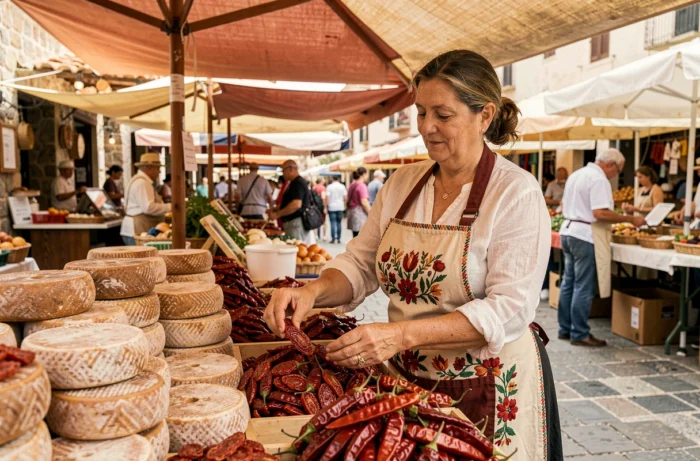
Porto Torres is not the first city that comes to mind when thinking of Sardinia. Stintino, Alghero, or the Costa Smeralda attract more attention. The weekly market in Porto Torres, however, remains a neighborhood gathering where locals do their shopping, exchange news, and perpetuate food habits specific to the north-west of the island.
A Sardinian market influenced by cruise stops
Have you ever noticed that a market changes its face depending on the day of the week? In Porto Torres, this phenomenon is amplified by port activity. The city serves as an entry port for cruise ships, including the Belle des Océans, which regularly operates the Porto Torres-Olbia route.
In 2026, Sardinia is expected to host around 54 luxury cruise stops and approximately 26,500 passengers by December. Some of these cruisers disembark in Porto Torres for a few hours. On cruise stop days, the stalls near the port see a significant increase in visitors.
This influx alters the offerings. Some vendors adapt their displays, offering individual portions of cheese or cured meats that are easy to take away. Others display a few words of English on their signs. Nevertheless, the market of Porto Torres retains its local character, far from the standardized tourist markets found in some Italian cities.
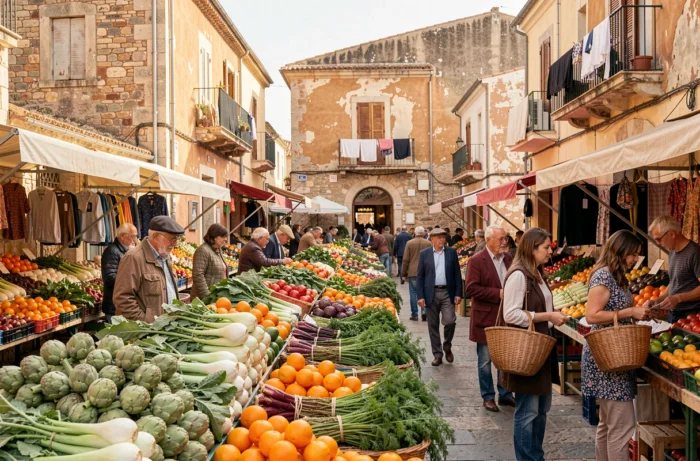
Typical Sardinian products at the Porto Torres market
A Sardinian market does not resemble a Provençal or Sicilian market. The products reflect a terroir marked by sheep farming, a dry climate, and an ancient cheese-making tradition.
Cheeses and cured meats at the heart of the stalls
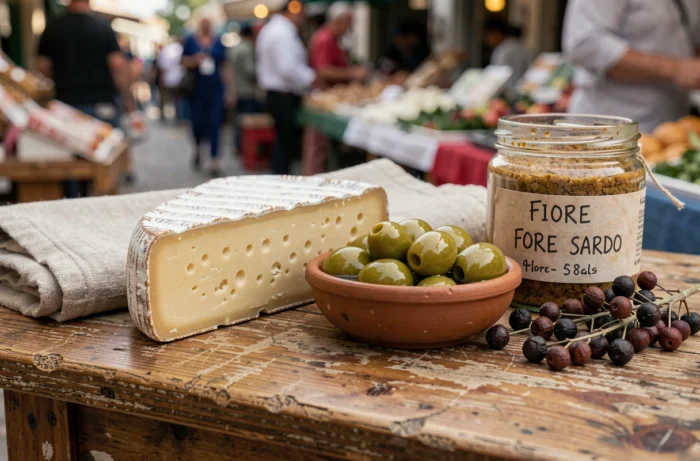
Pecorino sardo dominates the cheese stands. It comes in several aging varieties, from fresh and mild to very dry and sharp. Fiore sardo, a smoked sheep cheese, is also available, recognizable by its brown crust.
In terms of cured meats, salsiccia sarda (a dry sausage flavored with wild fennel) is found alongside guanciale, made from pork cheek. These products are often sold by weight, sliced in front of the customer.
Fruits, vegetables, and traditional breads
The fruit and vegetable stalls strictly follow the seasons. In summer, beef heart tomatoes and spiny artichokes (carciofo spinoso sardo) fill the space. Pane carasau, a crispy flatbread baked twice, is available year-round. Thin as a sheet, it keeps well, historically making it the bread of shepherds during transhumance.
- Pecorino sardo: hard sheep cheese, aged from a few weeks to over a year depending on the variety
- Pane carasau: flatbread without crumb, crispy, served plain or drizzled with olive oil in the “pane frattau” version
- Salsiccia sarda: dry pork sausage seasoned with wild fennel, sold whole or sliced
- Carciofo spinoso sardo: spiny artichoke with tender flesh, consumed raw in salads or braised
Municipal ordinances and market relocations
The Porto Torres market does not always take place in the same location. This is a point that many visitors are unaware of, which can turn a planned morning at the stalls into a walk through empty streets.
The municipality of Porto Torres regularly publishes relocation ordinances. An administrative act dated September 4, 2026, for example, provides for a relocation of the weekly Thursday market on September 10, 2026. These temporary moves are related to construction work, sporting events, or local festivals.
Before heading to the market, checking the albo pretorio (the register of public acts) on the municipality’s website can help avoid an unpleasant surprise. The ordinances are published there a few days before the relevant date, in Italian only.
Sardinian atmosphere and traditions around the market
The market is not an isolated place. It is part of a fabric of festivals, sagre (village food festivals), and seasonal events that enliven north-western Sardinia.
Porto Torres also hosts sports and cultural events in its squares. In September 2026, Porto Torres Calcio presented its team during a “Rosso Blu Day” in the city center. This type of gathering coexists with market days and alters traffic, stall locations, and the overall atmosphere.
What you won’t find elsewhere in Sardinia
Porto Torres stands out due to its geographical position. Located on the northern coast, facing the Gulf of Asinara, the city benefits from direct access to local fishermen’s fish markets. The fresh fish stalls offer Mediterranean species caught that very morning.
Bottarga (mullet roe) remains the flagship product of the north-western Sardinian markets. Grated over pasta or thinly sliced with a drizzle of lemon, it represents a fish preservation technique predating refrigeration.
- Honey vendors often offer arbutus honey, bitter and dark, typical of the Sardinian maquis
- Local wines (cannonau, vermentino di Sardegna) can sometimes be found for direct sale from small producers
- Olive oil pressed in the Sassari area complements the stalls, with varieties having a pronounced herbal flavor
The Porto Torres market functions as a microcosm of daily Sardinian life. Products change with the seasons, locations shift according to municipal ordinances, and attendance varies with cruise stops. Planning a visit on an ordinary market day, outside of peak tourist times, remains the best way to observe local life without a filter.