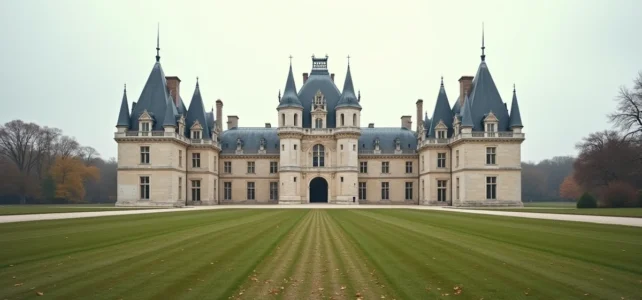
The Château de Chambord, a jewel of the French Renaissance, raises a recurring question: how much is it really worth? Viral videos claim “over one billion euros,” a figure that circulates without an identifiable source. The answer is less about classic real estate and more about the very particular legal status of this monument.
Legal Status of the Château de Chambord and the Impossibility of Sale
On the ground, the question of the value of the Château de Chambord runs into a regulatory wall. The national estate of Chambord is a public national establishment with an industrial and commercial character. It has legal personality under public law and administrative and financial autonomy.
In practical terms, its assets fall under public domain. The principle of inalienability of the French public domain prohibits any sale on the market. One cannot compare Chambord to a private property, even an exceptional one, because the legal framework purely and simply prevents the transaction.
This point radically changes the way we approach the notion of “estimated value.” No classic real estate appraisal applies to a property of the public domain. Price per square meter grids, methods of capitalizing rental income, or comparisons with castles sold at auction have no legal relevance here.
Viral Estimate of Over One Billion Euros: Where Does This Figure Come From?
Since 2024, an estimate of over one billion euros has been circulating massively on social media. Facebook videos and Instagram reels present Chambord as “the largest house in France” with this amount as a hook. The content has gone viral, shared thousands of times.
However, there is no explicit basis for property appraisal behind this figure. No evaluation report or detailed calculation is available to support it. The estimate relies on a buzz logic, not on a transparent methodology.
To understand the discrepancy, one must look at how evaluations of private historical monuments work. The few French castles sold at very high prices (the Château Louis XIV, built in the 2000s, for example, sold for nearly 300 million euros) remain well below the billion mark. And these properties, unlike Chambord, were privately owned and freely transferable.
What This Billion Aggregates Without Saying
The viral figure likely mixes several components that serious appraisers would separate:
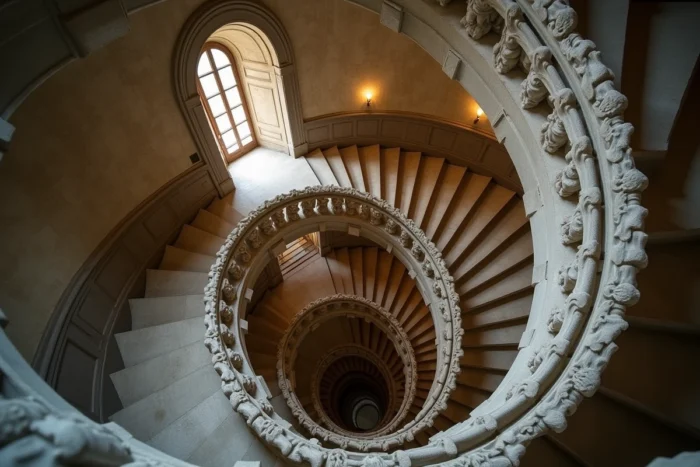
- The value of the historical building itself, with its hundreds of rooms, monumental fireplaces, and its double helix staircase attributed to the influence of Leonardo da Vinci
- The land of the estate, which spans several tens of thousands of hectares of forest and land, making it one of the largest enclosed parks in Europe
- The intangible value of the monument (global notoriety, UNESCO listing, annual tourist attendance, event potential)
Adding these three dimensions gives an impressive amount, but this addition has no transactional value since the property cannot change hands.
Strong Protection Zone: The Ecological Dimension That Weighs in the Balance
One aspect rarely addressed when discussing the value of Chambord concerns its recent classification as a strong protection zone within the framework of national biodiversity preservation policies. This status goes beyond the simple classification as a historical monument or world heritage site.
This protection directly influences land management. Land use, hunting, and management of natural environments are governed by specific constraints. For a real estate appraiser, these restrictions would reduce the market value of a typical piece of land, as they limit exploitation possibilities.
For Chambord, the opposite occurs. Ecological protection enhances the overall heritage value of the site. It ensures the sustainability of the natural setting that makes the estate attractive and justifies ongoing public investments in its preservation.

Cost of Reconstructing the Château de Chambord: A More Concrete Indicator
Rather than speculating on a non-existent market value, we can approach the question from a technical angle: how much would it cost to reconstruct such a building today?
Returns on this point vary, but several factors point to considerable amounts. Qualified stone masons for this type of work are rare, and their services are very expensive. Renaissance construction techniques (vaults, spiral staircases, monumental frameworks) require artisanal skills that few companies still master.
By comparison, the Château Louis XIV, a new classical style building made with high-end materials, represented an investment amounting to hundreds of millions of euros. Reproducing Chambord with its dimensions and architectural complexity would far exceed this amount, if only due to the volume of stone required.
This reconstruction calculation remains theoretical. It does not take into account the historical patina, the authenticity of the original materials, or the five centuries of history that make Chambord what it is. A reconstructed castle would not have the same symbolic value or heritage status.
National Heritage and Estimated Value: A Poorly Posed Question
The real lesson of Chambord is that the notion of “estimated value” applied to a monument of the French public domain does not have the same meaning as for a private property. One can estimate a reconstruction cost, calculate the economic impact of tourism on the territory, or add the theoretical value of the land and the building.
None of these approaches produces a “price” in the real estate sense of the term. Chambord is worth what the nation decides to invest to preserve it, year after year, through the budgets of its public establishment and heritage protection policies. The figure of one billion, viral and catchy, at least serves to remind us that this monument represents a collective asset of exceptional magnitude.